According to SPER Market Research, the Global Low Voltage Capacitor Bank Market is estimated to reach USD 757.76 million by 2034 with a CAGR 3.55%.
Introduction and Overview
The report includes an in-depth analysis of the Global Low Voltage Capacitor Bank Market, including market size and trends, product mix, Applications, and supplier analysis.
The global Low Voltage Capacitor Bank Market was valued at USD 534.6 million in 2024 and is expected to grow at a CAGR of over 3.55% from 2025 to 2034. Rising power factor penalties and increasing electricity costs are driving the adoption of advanced power optimization systems across commercial and industrial sectors. The growing use of capacitor banks integrated with intelligent power distribution systems enables real-time reactive power control and automated voltage regulation through communication with SCADA and energy management platforms, supporting market growth. These solutions effectively address rising reactive power demand linked to the electrification of heating and cooling in buildings. Moreover, the expansion of automated manufacturing and processing facilities is boosting demand for capacitor banks to correct power factor, reduce load imbalance, minimize voltage drops, and lower reactive power consumption. Additionally, the rapid deployment of decentralized energy systems such as rooftop solar, battery storage, and micro-wind installations is accelerating adoption, as these units are essential for voltage stabilization and reactive load management in low-voltage distributed energy resource grids.
By Component:
Based on type, the market is categorized into open air substations, metal enclosed substations, pole mounted units, and others. The integration of AI-enabled predictive maintenance supports early fault detection in capacitors, improves switching efficiency, and extends equipment lifespan, strengthening market growth. Open air substation low voltage capacitor banks are gaining traction due to rising renewable energy investments and compatibility with existing transmission and distribution infrastructure. Meanwhile, metal enclosed substations are increasingly preferred in urban and industrial settings because of their compact design, enhanced safety, and resistance to harsh environmental conditions, which reduce maintenance needs and improve operational reliability.
By organization size:
Based on application, the market is segmented into power factor correction, harmonic filtering, voltage regulation, renewable energy integration, industrial uses, data centers, and others. Power factor correction represents a significant share, driven by growing demand for energy-efficient and cost-effective solutions in commercial and industrial facilities. Harmonic filter capacitor banks are gaining momentum due to the rising presence of non-linear loads such as inverters and variable frequency drives that generate power quality disturbances. Voltage regulation applications are expanding as utilities and industries seek stable and reliable power distribution amid fluctuating loads. Furthermore, rapid integration of renewable energy sources across distribution networks is accelerating demand for capacitor banks to support voltage control, reactive power compensation, and overall power quality management.
Regional Insights:
The U.S. low voltage capacitor bank market has shown steady growth, supported by increased investments from utilities and industrial users in grid modernization and power quality enhancement. Stringent energy efficiency regulations and favorable government policies are encouraging wider adoption for power factor improvement and demand cost management. Across North America, strong momentum is driven by energy efficiency initiatives, renewable energy integration, smart grid expansion, and aging infrastructure upgrades. Europe is witnessing rising demand due to electric vehicle adoption, data center expansion, strict efficiency standards, and renewable deployment. In Asia Pacific, rapid industrialization, urban growth, smart grid implementation, and supportive policies are strengthening market prospects. Meanwhile, the Middle East and Africa are experiencing higher adoption as governments focus on improving power distribution efficiency and system resilience to meet rising electricity demand across residential, commercial, and industrial sectors.
Market Competitive Landscape:
The Low Voltage Capacitor Bank Market is highly consolidated. Some of the market key players are ABB, Aener EnergÃa, ARTECHE, Bharat Heavy Electricals, CIRCUTOR, Eaton, Enerlux Power, GE Vernova, Hitachi Energy, Larsen & Toubro, Legrand, Powerside.
Recent Developments:
• In September 2024, Arteche entered the energy storage market by acquiring a stake in Finland-based Teraloop Oy, gaining exclusive rights to distribute its flywheel energy storage technology in selected global markets.
• In February 2024, Powerside launched the Pole-MVar, a pole-mounted tuned-filter capacitor bank designed to cost-effectively reduce harmonic distortion and resonance. The compact solution addresses grid stability challenges arising from aging infrastructure and the growing integration of advanced technologies, meeting the requirements of both utility and industrial engineers.
Scope of the report:
Report Metric Details
Market size available for the years 2021-2034
Base year considered 2024
Forecast Period 2025-2034
Segments Covered By Type, By Application
Regions Covered North America, Latin America, Asia-Pacific, Europe, and Middle East & Africa
Companies Covered ABB, Aener EnergÃa, ARTECHE, Bharat Heavy Electricals, CIRCUTOR, Eaton, Enerlux Power, GE Vernova, Hitachi Energy, Larsen & Toubro, Legrand, Powerside.
Key Topics Covered in the Report
• Global Low Voltage Capacitor Bank Market Size (FY’2021-FY’2034)
• Overview of Global Low Voltage Capacitor Bank Market
• Segmentation of Global Low Voltage Capacitor Bank Market By Type (Open air substation, Metal enclosed substation, Pole mounted, Others)
• Segmentation of Global Low Voltage Capacitor Bank Market By Application (Power factor correction, Harmonic filter, Voltage regulation, Renewable integration, Industrial application, Data centers, Others)
• Statistical Snap of Global Low Voltage Capacitor Bank Market
• Expansion Analysis of Global Low Voltage Capacitor Bank Market
• Problems and Obstacles in Global Low Voltage Capacitor Bank Market
• Competitive Landscape in the Global Low Voltage Capacitor Bank Market
• Details on Current Investment in Global Low Voltage Capacitor Bank Market
• Competitive Analysis of Global Low Voltage Capacitor Bank Market
• Prominent Players in the Global Low Voltage Capacitor Bank Market
• SWOT Analysis of Global Low Voltage Capacitor Bank Market
• Global Low Voltage Capacitor Bank Market Future Outlook and Projections (FY’2025-FY’2034)
• Recommendations from Analyst
Global Low Voltage Capacitor Bank Market Size- By Type, By Application- Regional Outlook, Competitive Strategies and Segment Forecast to 2034
1. Introduction
1.1. Scope of the report
1.2. Market segment analysis
2. Research Methodology
2.1. Research data source
2.1.1. Secondary Data
2.1.2. Primary Data
2.1.3. SPER’s internal database
2.1.4. Premium insight from KOL’s
2.2. Market size estimation
2.2.1. Top-down and Bottom-up approach
2.3. Data triangulation
3. Executive Summary
4. Market Dynamics
4.1. Driver, Restraint, Opportunity and Challenges analysis
4.1.1. Drivers
4.1.2. Restraints
4.1.3. Opportunities
4.1.4. Challenges
5. Market variable and outlook
5.1. SWOT Analysis
5.1.1. Strengths
5.1.2. Weaknesses
5.1.3. Opportunities
5.1.4. Threats
5.2. PESTEL Analysis
5.2.1. Political Landscape
5.2.2. Economic Landscape
5.2.3. Social Landscape
5.2.4. Technological Landscape
5.2.5. Environmental Landscape
5.2.6. Legal Landscape
5.3. PORTER’s Five Forces
5.3.1. Bargaining power of suppliers
5.3.2. Bargaining power of buyers
5.3.3. Threat of Substitute
5.3.4. Threat of new entrant
5.3.5. Competitive rivalry
5.4. Heat Map Analysis
6. Competitive Landscape
6.1. Global Low Voltage Capacitor Bank Market Manufacturing Base Distribution, Sales Area, Product Type
6.2. Mergers & Acquisitions, Partnerships, Product Launch, and Collaboration in Global Low Voltage Capacitor Bank Market
7. Global Low Voltage Capacitor Bank Market, By Type, (USD Million) 2021-2034
7.1. Open air substation
7.2. Metal enclosed substation
7.3. Pole mounted
7.4. Others
8. Global Low Voltage Capacitor Bank Market, By Application, (USD Million) 2021-2034
8.1. Power factor correction
8.2. Harmonic filter
8.3. Voltage regulation
8.4. Renewable integration
8.5. Industrial application
8.6. Data centers
8.7. Others
9. Global Low Voltage Capacitor Bank Market, (USD Million) 2021-2034
9.1. Global Low Voltage Capacitor Bank Market Size and Market Share
10. Global Low Voltage Capacitor Bank Market, By Region, 2021-2034 (USD Million)
10.1. Asia-Pacific
10.1.1. Australia
10.1.2. China
10.1.3. India
10.1.4. Japan
10.1.5. South Korea
10.1.6. Rest of Asia-Pacific
10.2. Europe
10.2.1. France
10.2.2. Germany
10.2.3. Italy
10.2.4. Spain
10.2.5. United Kingdom
10.2.6. Rest of Europe
10.3. Middle East and Africa
10.3.1. Kingdom of Saudi Arabia
10.3.2. United Arab Emirates
10.3.3. Qatar
10.3.4. South Africa
10.3.5. Egypt
10.3.6. Morocco
10.3.7. Nigeria
10.3.8. Rest of Middle-East and Africa
10.4. North America
10.4.1. Canada
10.4.2. Mexico
10.4.3. United States
10.5. Latin America
10.5.1. Argentina
10.5.2. Brazil
10.5.3. Rest of Latin America
11. Company Profile
11.1. ABB
11.1.1. Company details
11.1.2. Financial outlook
11.1.3. Product summary
11.1.4. Recent developments
11.2. Aener EnergÃa
11.2.1. Company details
11.2.2. Financial outlook
11.2.3. Product summary
11.2.4. Recent developments
11.3. ARTECHE
11.3.1. Company details
11.3.2. Financial outlook
11.3.3. Product summary
11.3.4. Recent developments
11.4. Bharat Heavy Electricals
11.4.1. Company details
11.4.2. Financial outlook
11.4.3. Product summary
11.4.4. Recent developments
11.5. CIRCUTOR
11.5.1. Company details
11.5.2. Financial outlook
11.5.3. Product summary
11.5.4. Recent developments
11.6. Eaton
11.6.1. Company details
11.6.2. Financial outlook
11.6.3. Product summary
11.6.4. Recent developments
11.7. Enerlux Power
11.7.1. Company details
11.7.2. Financial outlook
11.7.3. Product summary
11.7.4. Recent developments
11.8. GE Vernova
11.8.1. Company details
11.8.2. Financial outlook
11.8.3. Product summary
11.8.4. Recent developments
11.9. Hitachi Energy
11.9.1. Company details
11.9.2. Financial outlook
11.9.3. Product summary
11.9.4. Recent developments
11.10. Larsen & Toubro
11.10.1. Company details
11.10.2. Financial outlook
11.10.3. Product summary
11.10.4. Recent developments
11.11. Legrand
11.11.1. Company details
11.11.2. Financial outlook
11.11.3. Product summary
11.11.4. Recent developments
11.12. Powerside
11.12.1. Company details
11.12.2. Financial outlook
11.12.3. Product summary
11.12.4. Recent developments
11.13. Others
12. Conclusion
13. List of Abbreviations
14. Reference Links
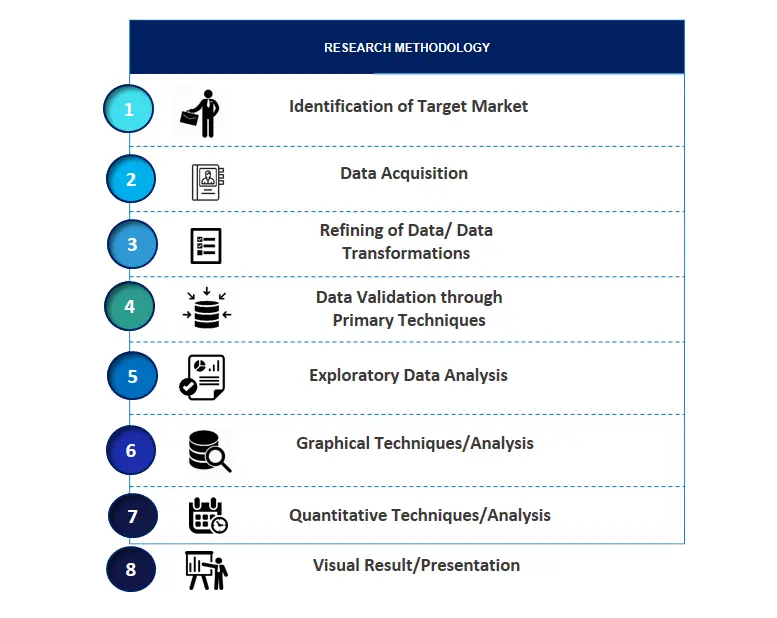
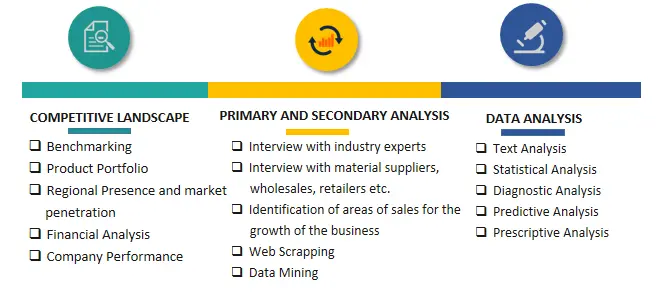
SPER Market Research’s methodology uses great emphasis on primary research to ensure that the market intelligence insights are up to date, reliable and accurate. Primary interviews are done with players involved in each phase of a supply chain to analyze the market forecasting. The secondary research method is used to help you fully understand how the future markets and the spending patterns look likes.
The report is based on in-depth qualitative and quantitative analysis of the Product Market. The quantitative analysis involves the application of various projection and sampling techniques. The qualitative analysis involves primary interviews, surveys, and vendor briefings. The data gathered as a result of these processes are validated through experts opinion. Our research methodology entails an ideal mixture of primary and secondary initiatives.